
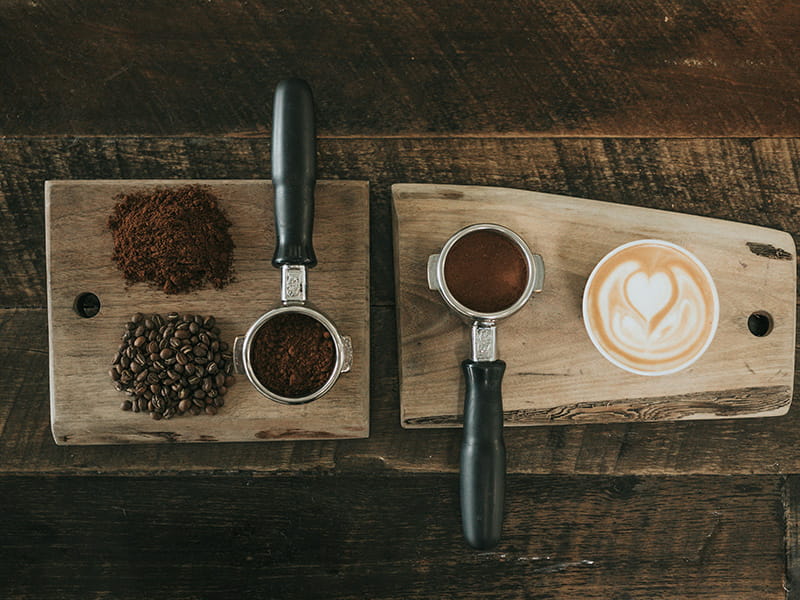
Has your coffee ever had an overwhelming bitter or sour taste following grinding and brewing? Or a taste that just isn’t quite right? There may be one common denominator causing your coffee to taste not quite as good as your favorite cafe does, that being the size of your coffee grinds!
The size of your coffee grind plays an important role in how fast and efficient your coffee brews and most importantly, how your coffee tastes. Whether you’re brewing French press, pour-over, or espresso, using the right grind can help you get the best flavor from your beans.
The good news? You don’t need to be a coffee expert to get it right. Here’s everything you need to know to start brewing better coffee at home.
Why Does Coffee Grind Size Matter?
When you brew coffee, water extracts flavor and aroma from the ground beans. The size of your grounds affects how quickly this happens.
Finer grounds have more surface area exposed to water, so they generally extract faster. Coarser grounds extract more slowly. This is different than the time it takes a brewing method to complete in relation to grind size, where finer grinds lead to longer brewing time while coarser grinds brew quicker.
When your grind size isn’t right for your brewing method, your coffee may taste unbalanced in one of several notable ways.
- Too fine: Coffee may taste bitter, harsh, or acrid.
- Too coarse: Coffee may taste sour, weak / watery, or under-developed.
- Just right: Your coffee has a balanced combination of sweetness, acidity, and body, often with a clean or lingering finish depending on the origin and roast level of your beans.
The Five Main Coffee Grind Sizes
Coffee grind sizes range from extra coarse to extra fine. Each working best with different brew methods.
1. Extra-Coarse
Extra-coarse grounds are large and chunky, similar to cracked peppercorns.
Best for: Cold Brew Coffee, because the grounds are large, they extract slowly, making them suitable for cold brews longer brewing times ranging from 18-24 hours.
2. Coarse
Coarse grounds resemble rough sea salt.
Best for: French Press and Cold Brew
A coarse grind works well for immersion brewing, where coffee grounds sit in water before being separated from the finished coffee. Courser grinds prevent small solubles from passing through french press filters allowing for a cleaner final cup.
3. Medium
Medium grounds have a texture similar to granulated sugar.
Best for: Automatic drip coffee makers and many pour-over brewers.
This is a great starting point for everyday coffee. Depending on your brewer and recipe, you may need to adjust slightly finer or coarser depending on your machine. When using a pour over, medium size grinds allow for a slow and consistent drip when brewing to maximize flavor without compensating for a heavier bodied cup.
4. Fine
Fine grounds resemble table salt.
Best for: Espresso machines and some stovetop espresso makers.
Espresso uses pressure to push water through a compact bed of coffee, making grind size especially important. Small adjustments can noticeably change the flavor and flow of your shot.
5. Extra-Fine
Extra-fine grounds have a powdery texture, similar to flour.
Best for: Turkish coffee.
This grind is much finer than what’s needed for most standard coffee makers and can clog filters in brewing methods that aren’t designed for it.
Which Grind Size Should You Use?
Use this quick reference to find a good starting point for your favorite brewing method.
| Brewing method | Recommended starting grind |
| Cold brew | Coarse to extra coarse |
| French press | Coarse |
| Drip coffee maker | Medium |
| Pour-over | Medium to medium-fine |
| AeroPress | Medium-fine to fine, depending on the recipe |
| Espresso machine | Fine |
| Turkish coffee | Extra fine |
These are general guidelines, not strict rules. Your coffee, equipment, and recipe may call for small adjustments.
How to Tell If Your Grind Size Is Wrong
Your coffee’s flavor can help you determine whether you need to adjust your grind.
If your coffee tastes bitter or harsh: It may be over-extracted. Try grinding slightly coarser and brewing again.
If your coffee tastes sour or underdeveloped: It may be under-extracted. Try grinding slightly finer.
If your French press has too much sediment: Try a coarser grind and check that your grinder produces consistent grounds.
If your espresso runs too quickly: Try grinding finer. If it runs too slowly, try grinding coarser.
Make small adjustments and change one variable at a time. This makes it easier to understand what improves your cup.
Remember that some coffees naturally have bright, fruity flavors, while darker roasts may have more pronounced roasted notes. The goal is balance, not eliminating every trace of acidity or bitterness.
Why Freshness and Consistency Matter
Choosing the right grind size is important, but consistency matters, too. A mix of very fine particles and large chunks can lead to uneven extraction and less balanced flavor.
A quality burr grinder like our Bodum Bistro Electric Burr Coffee Grinder can help produce more consistent grounds than many basic blade grinders. You don’t need the most expensive equipment—just something that suits your brewing method and budget.
Whenever possible, grind your coffee just before brewing. Whole beans generally retain their aroma better than ground coffee because grinding exposes more surface area to oxygen.
For better results:
- Grind only what you need for each brew.
- Store beans in an airtight container in a cool, dry place.
- Choose a grind that matches your brewing method.
- Stop in at Union Place Coffee Roasters for recommendations if you’re unsure.
Start Experimenting with Your Coffee
Finding the right grind size doesn’t have to be complicated. Start with the recommended setting for your brewing method, keep your recipe consistent, and pay attention to how your coffee tastes.
If it’s too bitter, try going coarser. If it’s sour or underdeveloped, try going finer. Small adjustments can make a noticeable difference.
Different coffees may also need different settings, so don’t be afraid to experiment. Part of the fun of brewing coffee at home is discovering what you enjoy most.
Better coffee starts with the right grind. Explore freshly roasted beans, try a new brewing method, and see how a few small changes can transform your daily cup.
And if you ever need a hand, stop by Union Place Coffee Roasters. We’re always happy to help you find the right coffee and grind for your perfect brew.
Happy brewing!